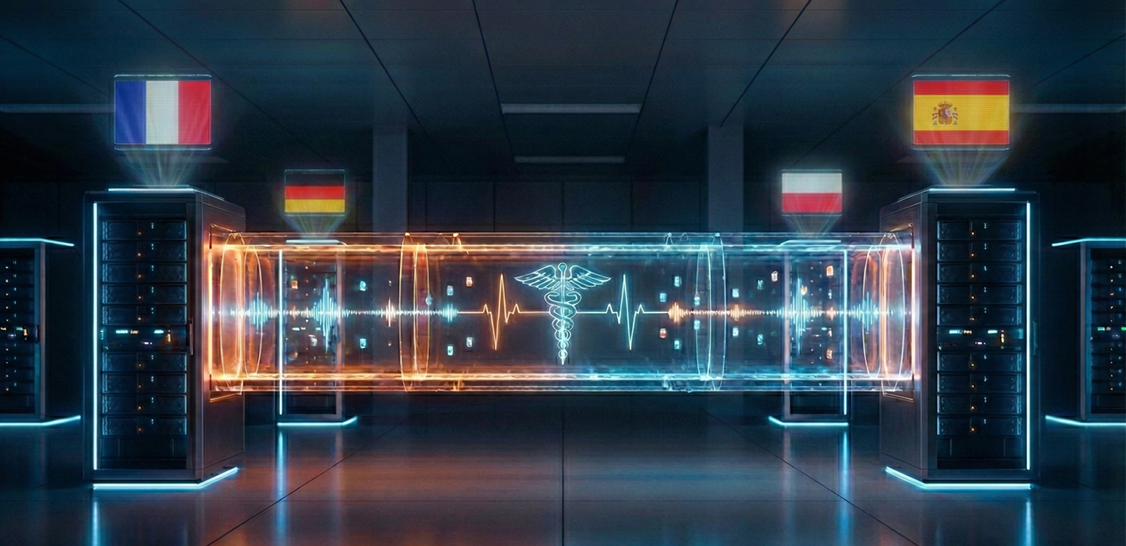
The Magnet Problem: Shattered Glass Houses and the Illusion of Coexistence
Let’s strip away the grand geopolitical chess games for a moment. Yes, watching autocrats treat the world like a live-action episode of Pinky and the Brain waking up every day trying to take over the world is exhausting.
But the real, raw friction of life doesn't just happen on the world stage. It happens in our own living rooms, in our own heads, and in the ruins of our own personal lives.
I know this because I’ve lived it.
I was married. I separated. I tried to move forward, only to feel like I was getting punished again and again. I tried to be accommodating. I tried to force patience into my system. I swallowed my pride, bit my tongue, and refused to let people provoke my anger. I kept pushing forward, but the overwhelming feeling I was left with was just damage. And inevitably, sitting in the wreckage, I asked myself the classic victim’s question: "Why me?"
The answer, I eventually realized, wasn't comfortable. I had to look in the mirror and acknowledge what I call my "previous life." I had done really bad stuff. I had caused friction. But at some point, you have to hit a wall of brutal self-criticism and ask yourself: Is this what you want? Is this how you want to treat people? And is this really the way you want to be treated?
In Germany, we have a saying: "Wer im Glashaus sitzt, sollte nicht mit Steinen werfen" (People who live in glass houses shouldn't throw stones). But the true danger of that idiom isn't just that you might hit someone outside. The real tragedy is that you are sitting dead in the center of the glasshouse. When you throw a stone and the walls shatter, the collateral damage falls directly onto you. You end up cutting yourself the deepest.
If you read my posts and wonder why I sometimes talk about myself in the third person, this is exactly why. It is a deliberate mechanism for radical self-reflection. I wasn't always like this, but my work has fundamentally shaped me. Anyone who truly knows me knows that I constantly force myself to look at things from entirely different perspectives. I wasn’t born with this ability; I had to consciously engineer this mental system for myself. My job demands constant, rigorous attention. So, even when my deepest instinct is to just shut myself off completely from the chaos, I am forced to remain open to things. Stepping into the third person allows me to step outside the emotional blast zone, look at the broken glass, and analyze the situation objectively.
This planet is incredibly vast. There is more than enough room for us to cross paths, to walk side-by-side, or simply to stay completely out of each other's way. Constant friction is not a geographical necessity; it is a choice. We have to accept people exactly as they are, even and especially when they think fundamentally differently than we do.
But here is the hard truth, and it is a truth that forms the very architectural backbone of the AEGIS project: Mere coexistence is not progress.
Acceptance and avoidance work perfectly fine if your only goal is to survive without breaking more glass. But the moment you want to achieve a shared goal whether that is building a functional personal relationship, recovering from your own mistakes, or constructing a unified European digital infrastructure "just existing" is no longer enough.
If you want to pull in the same direction, the strands must interlock.
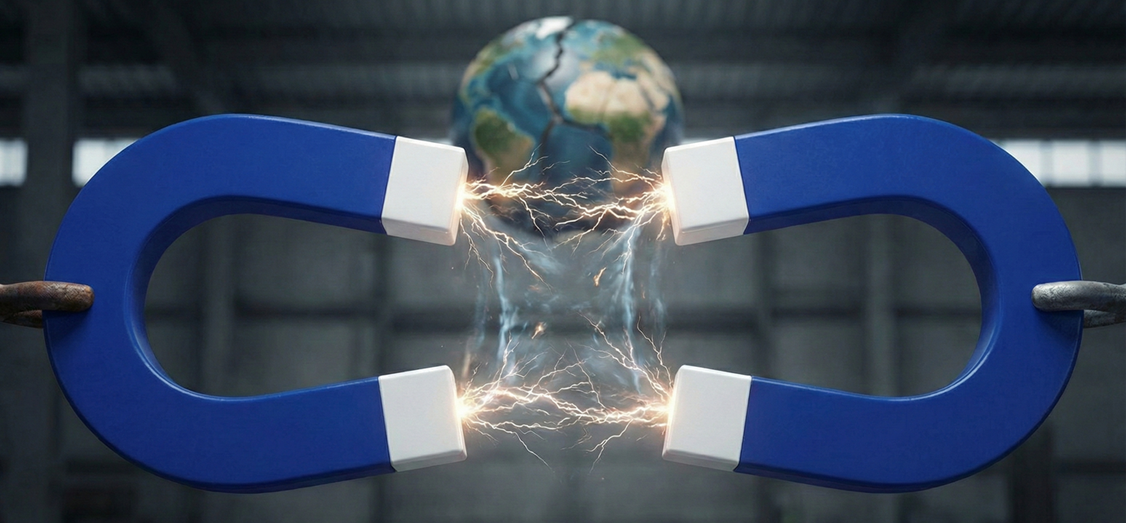
In tech, we call this interoperability. In human cooperation, it’s just called empathy and alignment. If we don't align our efforts and build interfaces to connect our differences, we become like two magnets with the exact same polarity. We can be forced into the same room, but the harder life pushes us together, the more violently we repel each other.
We do not have to be the same to work together. We don't have to surrender our individual identities or erase our past mistakes. But if we actually want to build something that lasts and stop living in shattered glass houses our interfaces must connect. Otherwise, the machinery of progress simply grinds to a halt.