Introducing the Elvatis Open Source Ecosystem
We moved all our open-source work to a dedicated GitHub organization. This post covers every repo, the AAHP v3 protocol, and how it all connects.
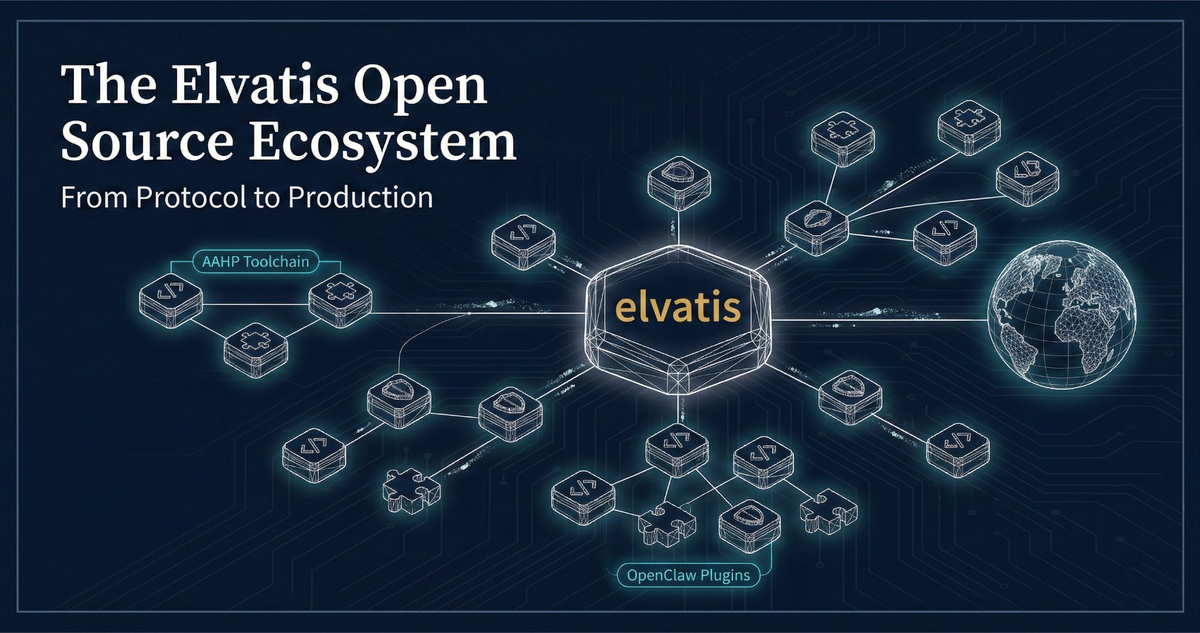
We moved all our open-source work to a dedicated GitHub organization: github.com/elvatis. This post explains what lives there, why we did it, and how it all connects.
Why a Dedicated Org?
Elvatis started as a one-person IT consultancy. The tooling grew. Plugins, protocols, automation -- it stopped making sense to keep everything under a personal GitHub account. A proper org gives us:
- Clean separation between personal projects and published tools
- Easier collaboration if others want to contribute
- Consistent naming and discoverability
The AAHP Protocol -- Our Foundation
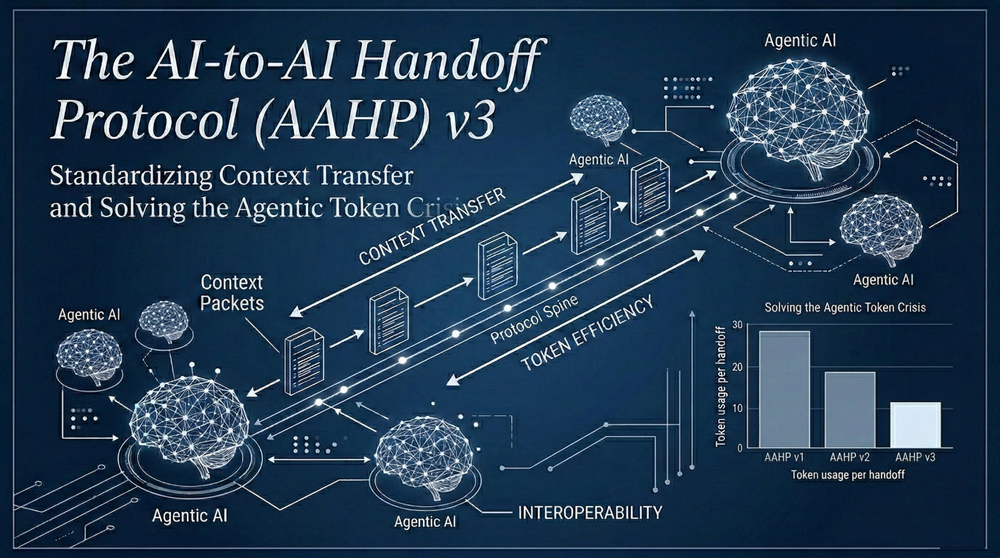
Everything we build follows the AAHP v3 (AI-to-AI Handoff Protocol). It is a file-based protocol for structured context handoff between AI agents. Instead of passing entire chat histories between models (expensive, noisy, insecure), AAHP uses compact JSON handoff objects with only the relevant context.
The result: up to 98% token reduction compared to naive context passing.
Repository: AAHP -- The protocol spec, templates, and reference implementation.
Every project in our ecosystem carries an .ai/handoff/ directory with AAHP manifests, logs, and dashboards. This is our standard. No exceptions.
The AAHP Toolchain
aahp-orchestrator
A VS Code extension that injects AAHP context into GitHub Copilot and Claude Code sessions. When you open a project, the orchestrator automatically loads the handoff state so your AI assistant knows exactly where things stand -- zero questions, full context.
Repository: aahp-orchestrator
aahp-runner
An autonomous CLI agent that spawns Claude Code sessions to work through project tasks. Point it at a repo with AAHP handoff files, and it picks up the next task, executes it, updates the handoff state, and moves on. Schedulable via cron for fully autonomous development workflows.
Repository: aahp-runner
secure-dev-ai
A security guard CLI that scans repositories for secrets, vulnerabilities, and misconfigurations before AI agents touch them. Acts as a pre-flight check in the AAHP pipeline -- if critical findings exist, agent runs get blocked.
Repository: secure-dev-ai
OpenClaw Plugins (elvatis org)
All our OpenClaw plugins live under the elvatis org. Each one is published to npm (@elvatis_com scope) and ClawHub. They extend OpenClaw with domain-specific capabilities:
Infrastructure & Ops
- openclaw-docker -- Manage local Docker containers, logs, and stacks via natural language
- openclaw-gpu-bridge -- Offload heavy compute (embeddings, BERTScore) to a remote GPU server
- openclaw-ops-elvatis -- Operational automation: monitoring, alerts, maintenance
- openclaw-ispconfig -- Manage ISPConfig hosting, sites, clients, and mailboxes
- openclaw-inwx -- Manage INWX domains and DNS records
Smart Home
- openclaw-homeassistant -- Control Home Assistant entities, scenes, and scripts
Memory & Knowledge
- openclaw-memory-core -- Shared library: JSONL store, hash embeddings, redaction engine
- openclaw-memory-brain -- Auto-capture personal memories from conversations
- openclaw-memory-docs -- Explicit documentation storage and recall
Reliability & Safety
- openclaw-model-failover -- Smart AI model failover with provider-wide cooldowns and auto-recovery
- openclaw-self-healing-homeofe -- Self-healing guardrails: auto-fix reversible failures (rate limits, disconnects, stuck sessions)
Content & Feeds
- openclaw-rss-feeds -- Fetch RSS feeds, enrich with CVE data, publish digests to Ghost CMS
Productivity
- openclaw-todo -- Manage TODOs in markdown files with natural language
- openclaw-shortcuts -- Config-driven /help command with local shortcuts
Developer Tools
- commitprompt -- Generate meaningful commit messages
- failprompt -- Structured failure analysis prompts
- clawhub-scanner -- Scan and validate ClawHub skill packages
Other Projects (homeofe account)
Some projects remain under the personal account because they are not OpenClaw plugins:
- AEGIS -- Autonomous European Government Infrastructure System
- BMAS -- Research project: AI evaluation metrics and benchmarking
How It All Connects
The workflow looks like this:
- AAHP protocol defines how AI agents communicate
- aahp-orchestrator (VS Code) gives Copilot/Claude Code full project context
- aahp-runner autonomously picks up tasks and executes them
- secure-dev-ai blocks unsafe agent runs
- OpenClaw plugins provide the runtime capabilities (memory, home automation, infrastructure, content)
- Everything follows the same handoff structure, the same conventions, the same pipeline
It is not a monolith. It is a loosely coupled ecosystem where each piece does one thing well and talks to the others through structured handoffs.
Orchestration
- openclaw-model-orchestrator -- Multi-LLM orchestration with fan-out, pipeline, and consensus patterns using AAHP v3 handoffs
What is Next
We are actively working on:
- More OpenClaw plugins as needs arise
- Better documentation and onboarding
Everything is open source. If you find something useful, use it. If you want to contribute, PRs are welcome.